// tag

Posts tagged "code to spec"

3 posts found

Featured image for article: The Context Graph You Can Verify Code Against
May 23, 2026 context graph verify code against intent code graph RAG

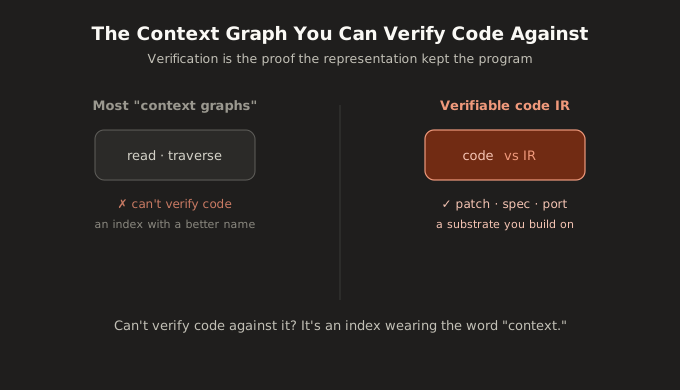
The Context Graph You Can Verify Code Against

Context graph is a term people understand and reach for. But most things called a context graph are one-way extractions you can read and never check anything against. The version worth wanting is the one you can verify code against, and that single requirement is what separates an index from a verifiable code IR. Here is what verification demands, and why it is the only honest test of a context graph.
Featured image for article: Spec-Driven Development for Brownfield: Verify Code Against Intent With a Verifiable Code Context Layer
May 24, 2026 spec driven development spec to code code to spec

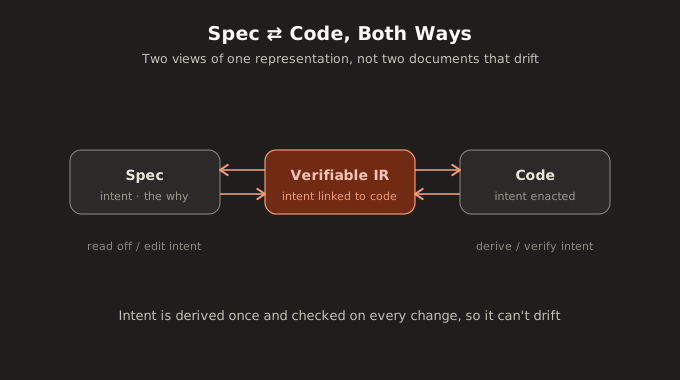
Spec-Driven Development for Brownfield: Verify Code Against Intent With a Verifiable Code Context Layer

Specs and code drift apart the day after you write the PRD, because they are two separate documents that nobody keeps in sync. A verifiable context layer derives the spec a codebase actually implements and then continuously checks the code against it. Here is how spec-driven development works on a brownfield codebase, and why it needs a verifiable code IR that checks code against intent.

Featured image for article: What Verifiable Means for Code Context, and Why GraphRAG Can't Check Code Against Intent
May 28, 2026 verifiable IR intermediate representation verify code against intent

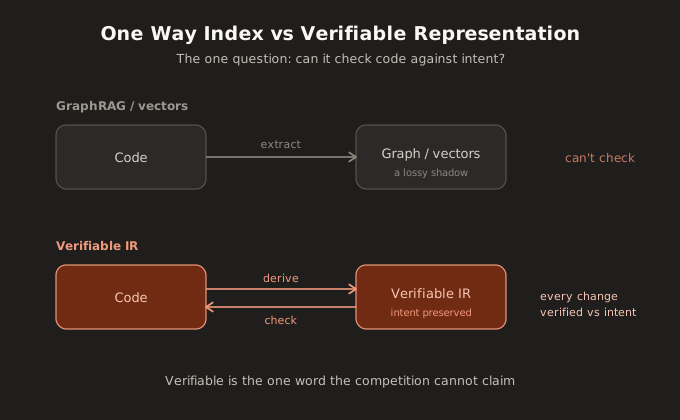
What Verifiable Means for Code Context, and Why GraphRAG Can't Check Code Against Intent

Verifiable is the one word competitors cannot claim. A code graph extracts a shadow of your code and can never tell you whether the code still does what it is supposed to. A verifiable intermediate representation is a derived contract that every change gets checked against. Here is what verifiable actually means, why GraphRAG and vector search can only retrieve, and what continuous verification unlocks.