// tag

Posts tagged "intermediate representation"

11 posts found

Featured image for article: A Code Graph Disintegrates Your Code. A Verifiable IR Preserves It.
Jun 3, 2026 code graph code graph RAG graph RAG code

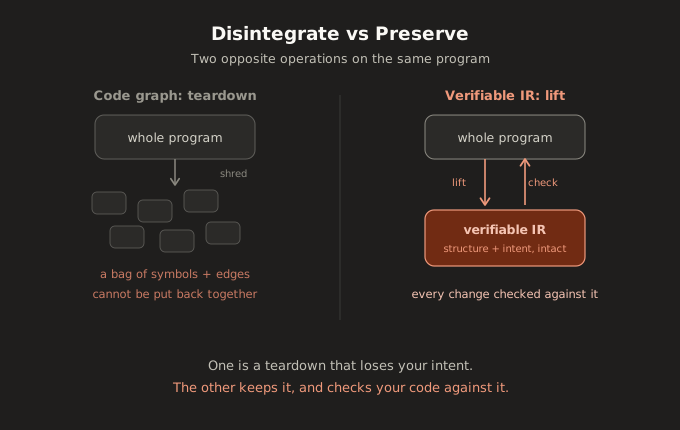
A Code Graph Disintegrates Your Code. A Verifiable IR Preserves It.

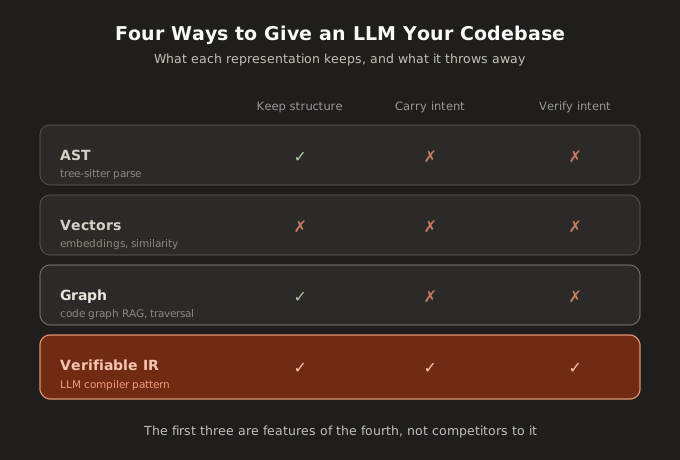
A code graph takes a whole, coherent program and shreds it into a bag of symbols and edges. It is genuinely useful, but it is a teardown, and the meaning never survives the pieces. A verifiable intermediate representation is the opposite move. It lifts your code into a higher layer that keeps the intent intact, then checks every change against it. Here is the difference between shredding and preserving, and why it decides everything downstream.

Featured image for article: Why Vector Search and GraphRAG Both End in the Same Context Rot
Jun 1, 2026 context rot vector search limitations GraphRAG limitations

Why Vector Search and GraphRAG Both End in the Same Context Rot

Vector search and GraphRAG look like opposites, but they share the same final move. Parse the code, retrieve some of it, rerank it, and stuff it into the context window. That last step is where both of them rot, because a model that is handed a pile of chunks degrades the same way no matter how the pile was chosen. Here is why the retrieval layer is not the cure for context rot, and what is.

Featured image for article: From Code Graph to Context Graph: Why a Graph of Symbols Isn't a Graph of Meaning
May 19, 2026 code graph context graph code graph RAG

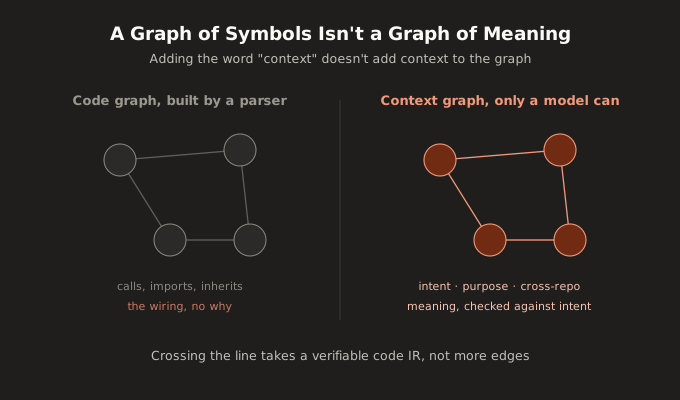
From Code Graph to Context Graph: Why a Graph of Symbols Isn't a Graph of Meaning

Everyone building code intelligence ends up at a graph, and then they start calling it a context graph because plain code graph stopped feeling like enough. But adding the word context does not add meaning. A graph of symbols and a graph of meaning are different objects. Here is the line between them, and why crossing it requires a verifiable code IR, not more edges.

Featured image for article: GraphRAG for Codebases: What It Solves, Where It Breaks, and the Layer Above It
May 20, 2026 graphrag for codebase graph rag for codebase GraphRAG for codebases

GraphRAG for Codebases: What It Solves, Where It Breaks, and the Layer Above It

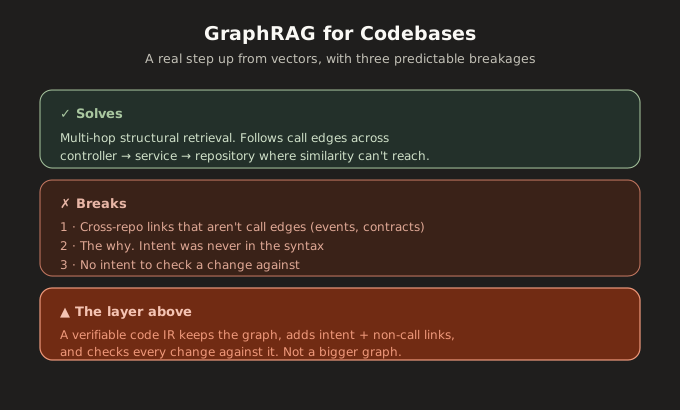
GraphRAG for codebases is a genuine step up from vector search. It follows real call edges instead of guessing at similarity, and it wins on architectural questions. But it breaks in three predictable places: cross-repo links that aren't call edges, the why behind the code, and anything that needs intent you can check changes against. Here is a clear-eyed map of what graph RAG for codebases solves, where it stops, and the verifiable context layer that sits above it.

Featured image for article: One Context Layer, Every AI Coding Tool: Serving a Verifiable IR Over MCP
May 27, 2026 MCP code intelligence MCP server code code context MCP url

One Context Layer, Every AI Coding Tool: Serving a Verifiable IR Over MCP

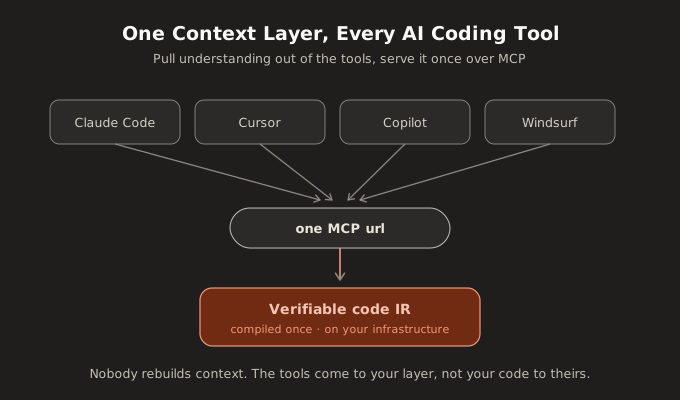
Your team uses Claude Code, Cursor, Copilot, and Windsurf, and each one rebuilds an understanding of your codebase from scratch and shares nothing with the others. MCP is the standard that lets you stop doing that. Compile your repos once into a verifiable IR and serve it to every tool over one MCP endpoint. Here is why the context layer belongs outside the tool, and what changes when it does.

Featured image for article: Semantic Code Search Is a Retrieval Problem. Context Is a Representation Problem.
May 21, 2026 semantic code search code search retrieval problem

Semantic Code Search Is a Retrieval Problem. Context Is a Representation Problem.

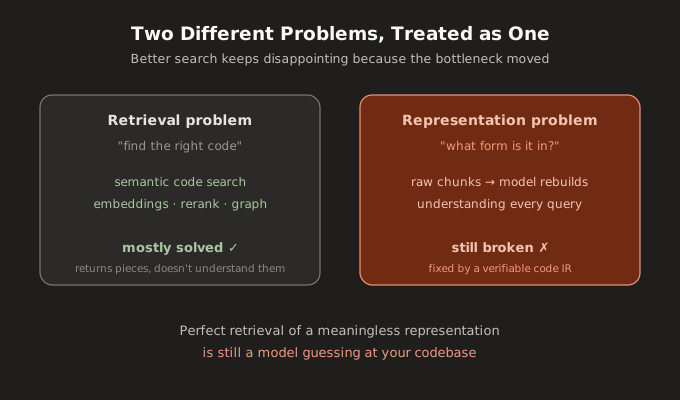
Semantic code search keeps getting better at finding the right code, and it keeps disappointing teams who expected better answers from their AI tools. The reason is that those are two different problems. Finding code is retrieval. Understanding code is representation. Better retrieval over a poor representation has a ceiling, and here is why a verifiable code IR raises it.

Featured image for article: Code Graph RAG, Explained, and Why a Verifiable IR Is the Next Step Past It
May 22, 2026 code graph RAG graph RAG code GraphRAG for codebase

Code Graph RAG, Explained, and Why a Verifiable IR Is the Next Step Past It

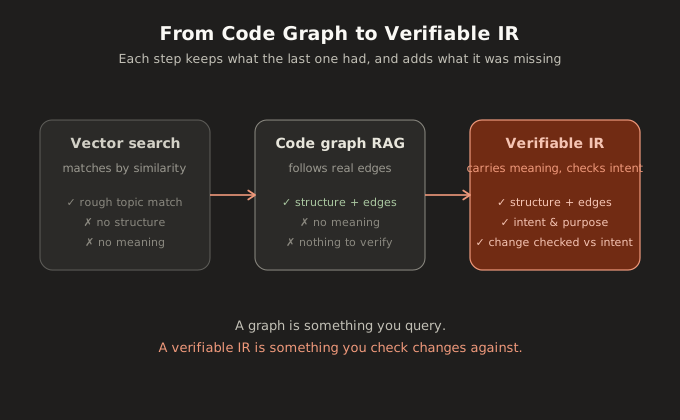
Code graph RAG fixed the biggest flaw in vector search. It follows real edges instead of guessing at similarity. But a graph of symbols is still not a graph of meaning, and it cannot tell you whether a change still does what the system is supposed to do. Here is how code graph RAG actually works, where it stops, and why a verifiable intermediate representation is the layer above it.

Featured image for article: The Context Graph You Can Verify Code Against
May 23, 2026 context graph verify code against intent code graph RAG

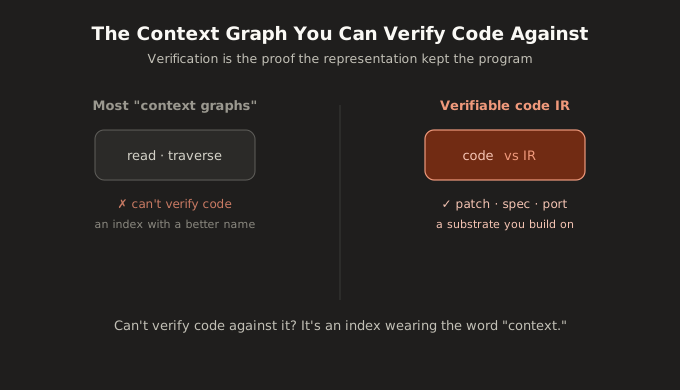
The Context Graph You Can Verify Code Against

Context graph is a term people understand and reach for. But most things called a context graph are one-way extractions you can read and never check anything against. The version worth wanting is the one you can verify code against, and that single requirement is what separates an index from a verifiable code IR. Here is what verification demands, and why it is the only honest test of a context graph.

Featured image for article: Spec-Driven Development for Brownfield: Verify Code Against Intent With a Verifiable Code Context Layer
May 24, 2026 spec driven development spec to code code to spec

Spec-Driven Development for Brownfield: Verify Code Against Intent With a Verifiable Code Context Layer

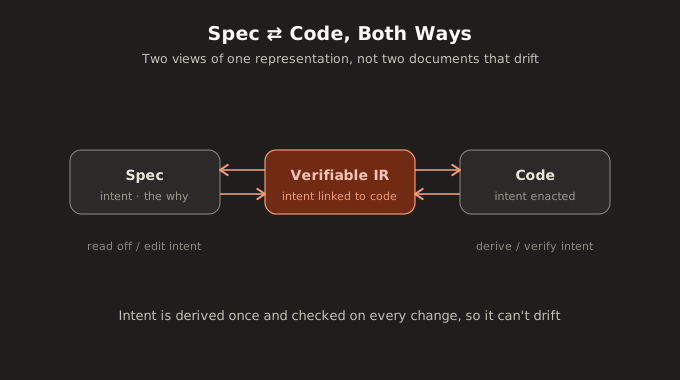
Specs and code drift apart the day after you write the PRD, because they are two separate documents that nobody keeps in sync. A verifiable context layer derives the spec a codebase actually implements and then continuously checks the code against it. Here is how spec-driven development works on a brownfield codebase, and why it needs a verifiable code IR that checks code against intent.

Featured image for article: What Verifiable Means for Code Context, and Why GraphRAG Can't Check Code Against Intent
May 28, 2026 verifiable IR intermediate representation verify code against intent

What Verifiable Means for Code Context, and Why GraphRAG Can't Check Code Against Intent

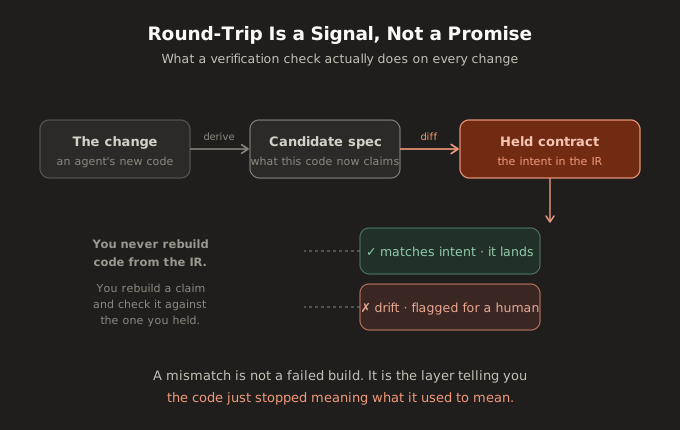
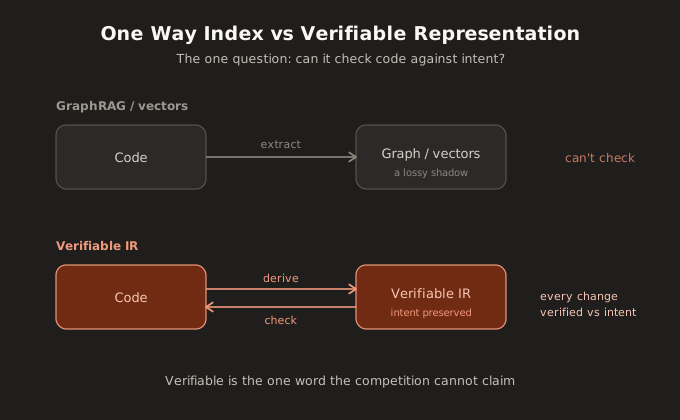
Verifiable is the one word competitors cannot claim. A code graph extracts a shadow of your code and can never tell you whether the code still does what it is supposed to. A verifiable intermediate representation is a derived contract that every change gets checked against. Here is what verifiable actually means, why GraphRAG and vector search can only retrieve, and what continuous verification unlocks.