A comic about shipping software in 2026
Stop building graph engines, AST parsers, and memory layers
ByteBell ships the context layer already finished, at 94 percent accuracy across 10M files
Every team building on agents ends up assembling the same plumbing by hand. We finished that work, so your engineers review a short list of real problems instead of the full diff, and every finding points at the file and line that contradicts it.
First findings in about ten minutes
Mark, who used to know why every line existed
Twelve years of context in one head. Then three weeks of agents.
How Mark became the person production trusts
Year one to year twelve.

I know why every line in here exists.
He wrote it by hand
Every line came from an engineer who chose it, at the pace a human can actually think.
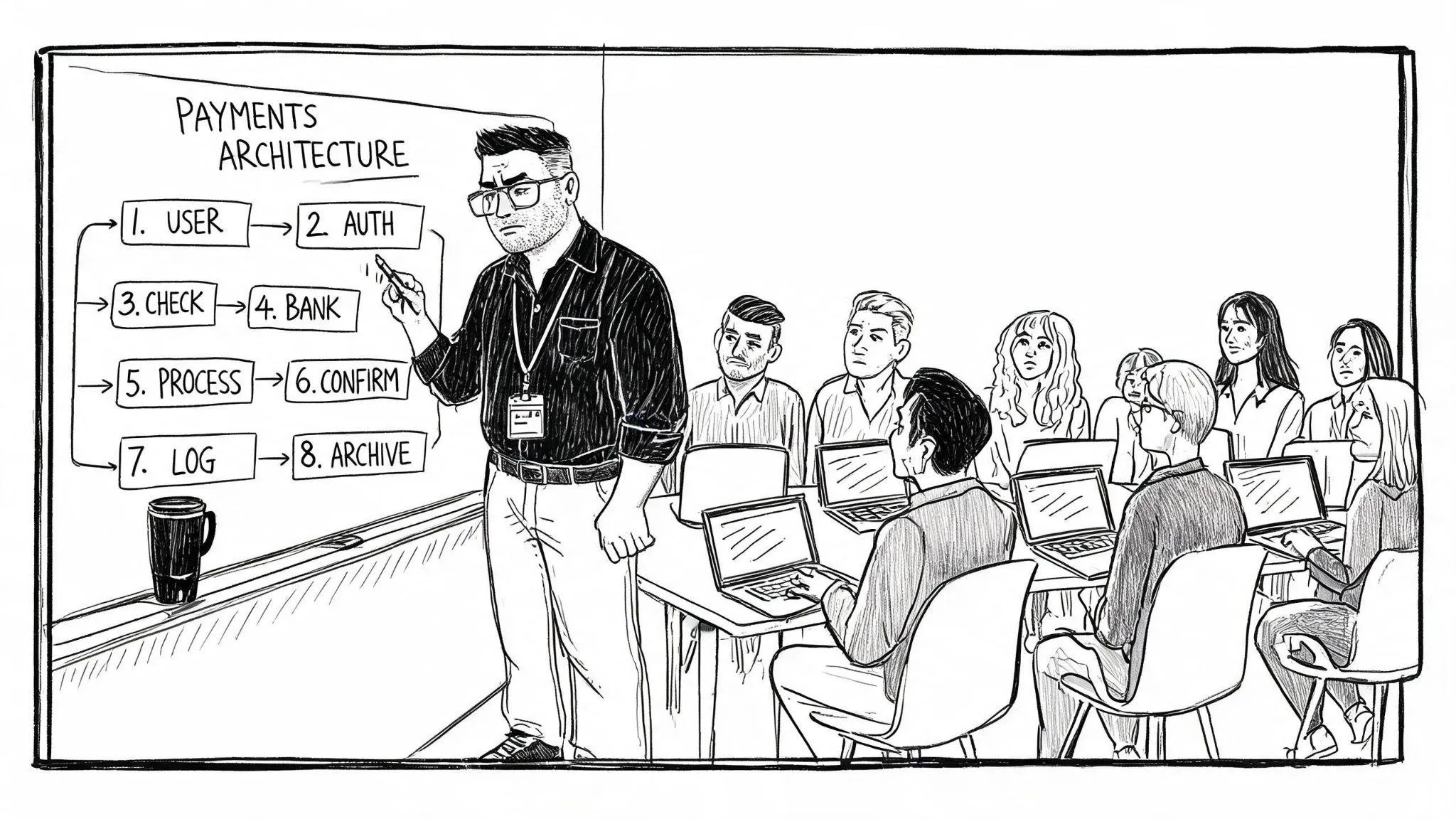
Ship it. It goes out under my name.
Eight engineers, one name
Mark leads the team that owns the platform he built. Whatever ships, ships under his name.
He held the whole shape
Twelve years of context in one head. That was the system that kept production safe.
Before AI, the system made sense
Written by a person. Reviewed by a person. Understood by someone.
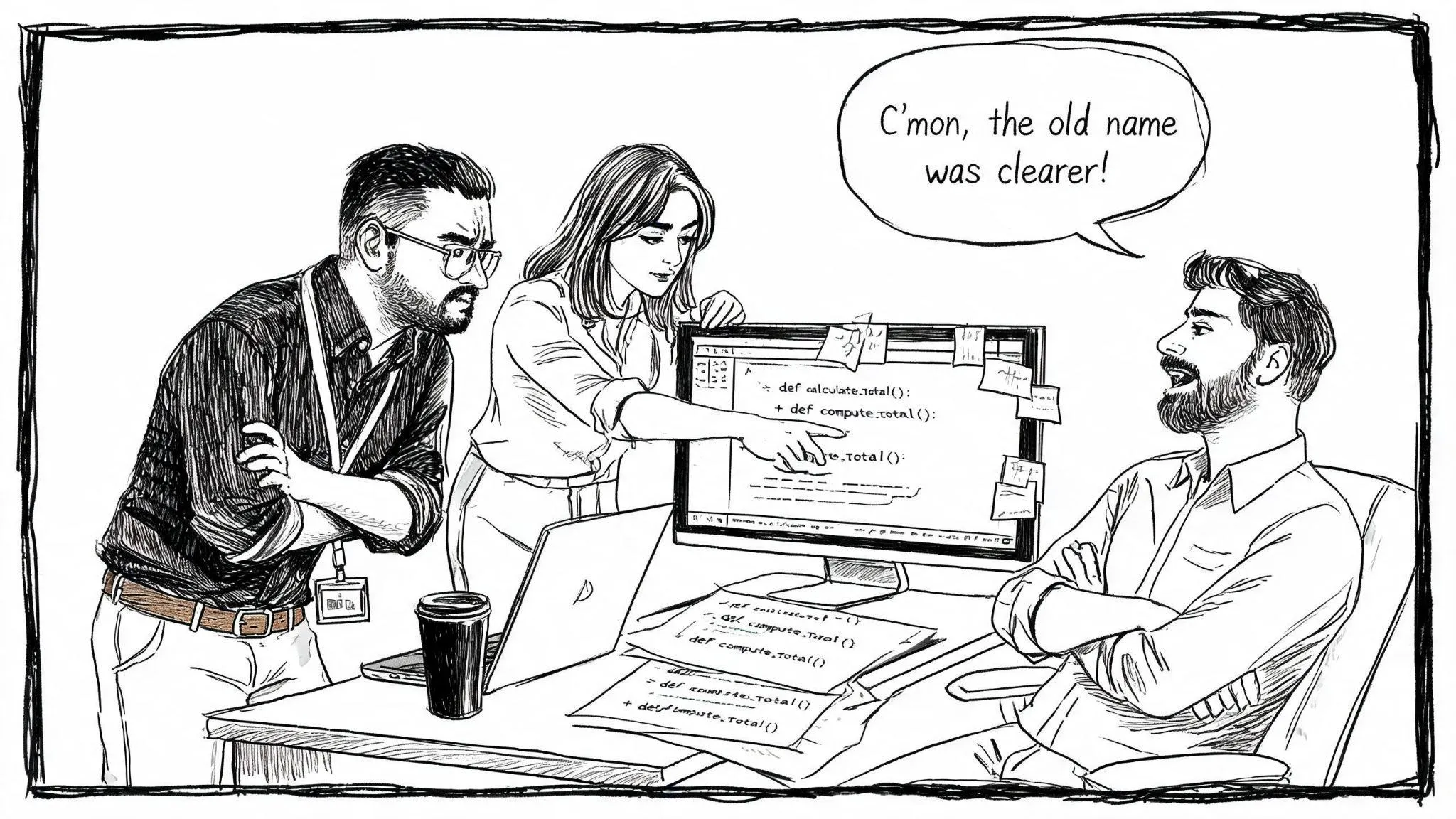
Why this retry loop? Walk me through it.
Reviewed by a person
Another engineer read it, questioned it, and pushed back before it merged.
Understood by someone
For every part of the system, some human still held the reason it worked.
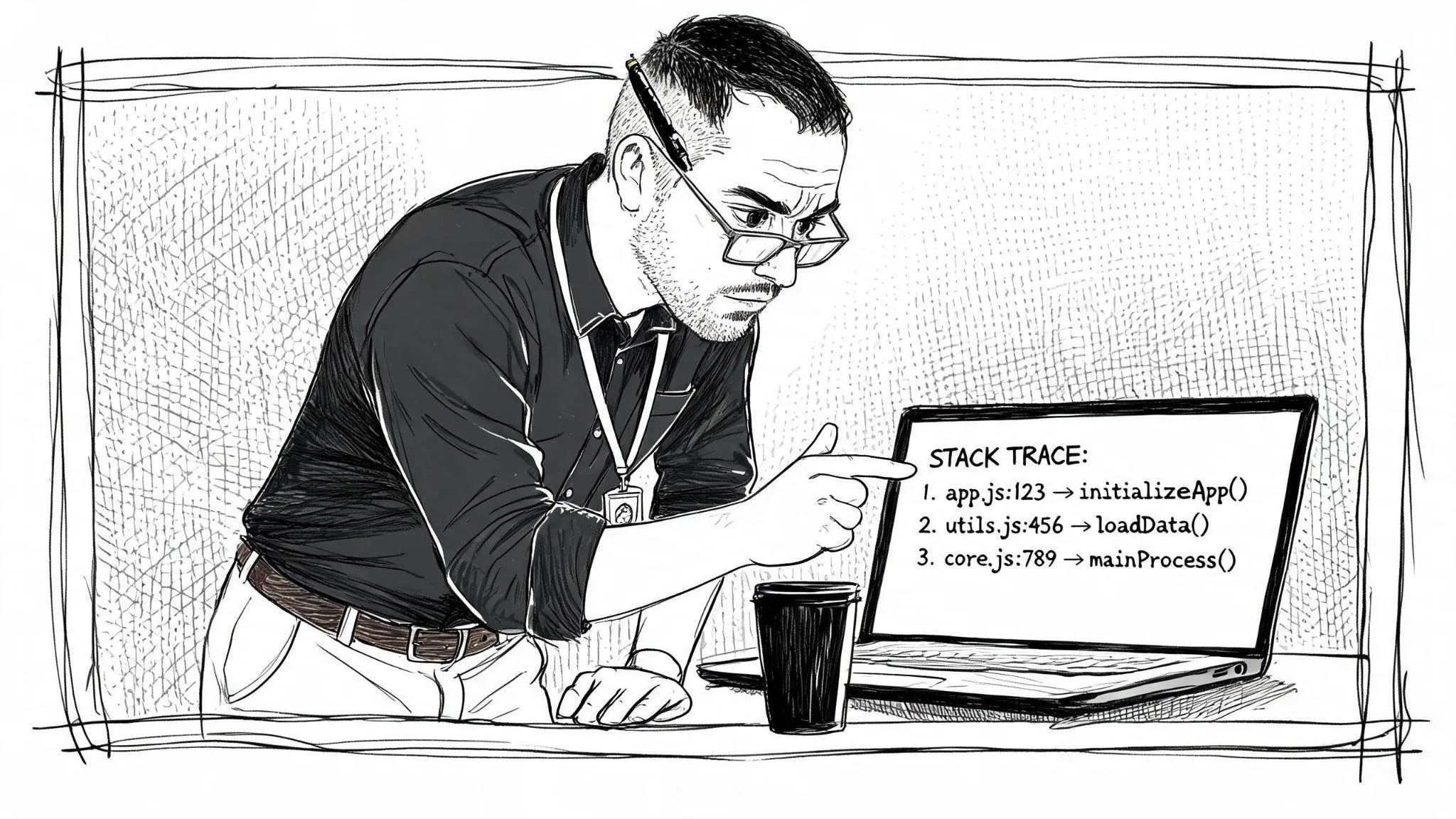
This bug has an author. And a reason.
Traceable to a decision
Slow, yes. But Mark could trace any break to a person and the choice they made.
Then the agents arrived
Three weeks is all it took for the old rhythm to stop working.
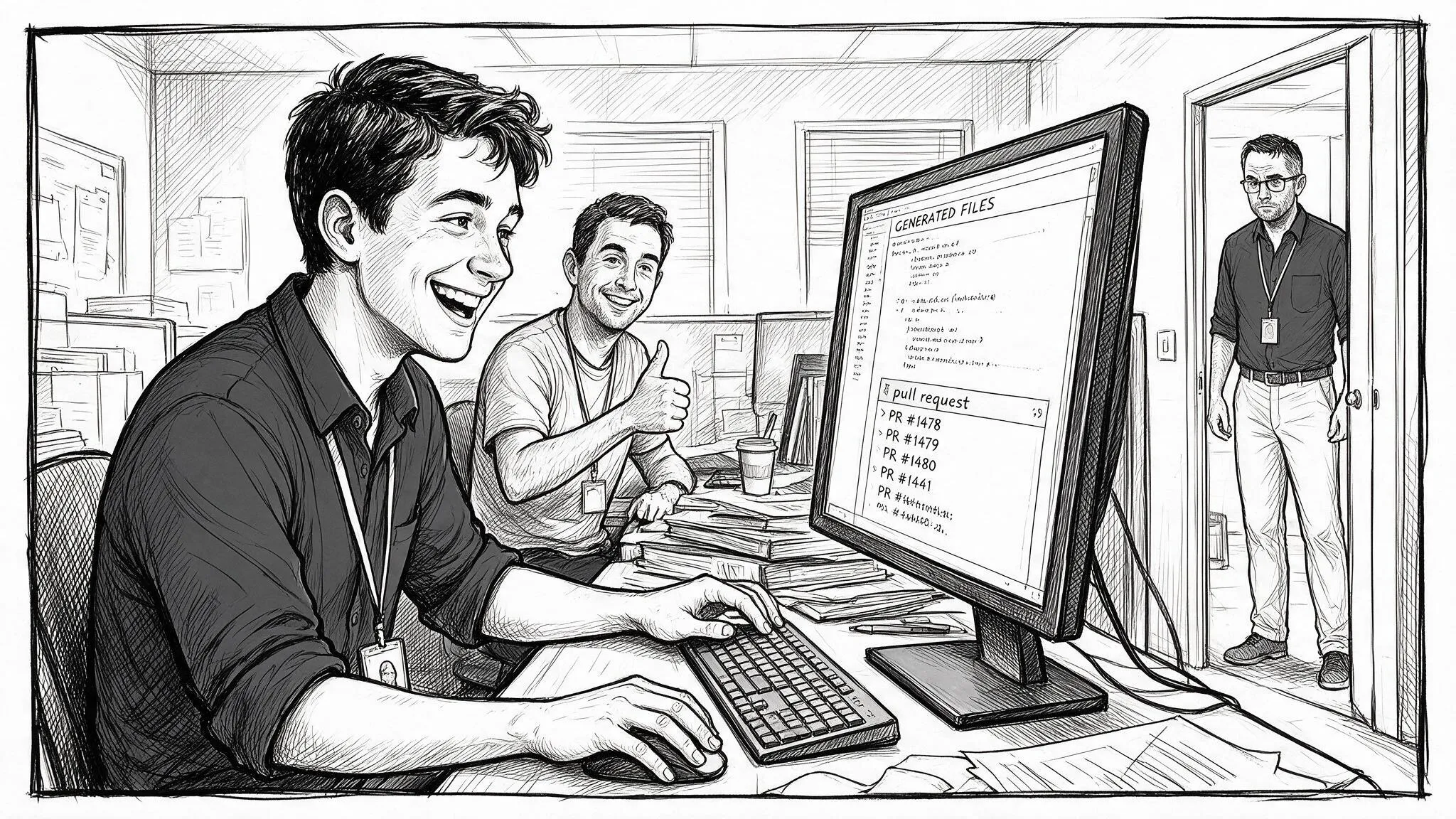
Four sprints of work. It's Thursday.
10× the code, overnight
Every team ships most of its code with AI, more each week than eight engineers could ever read.
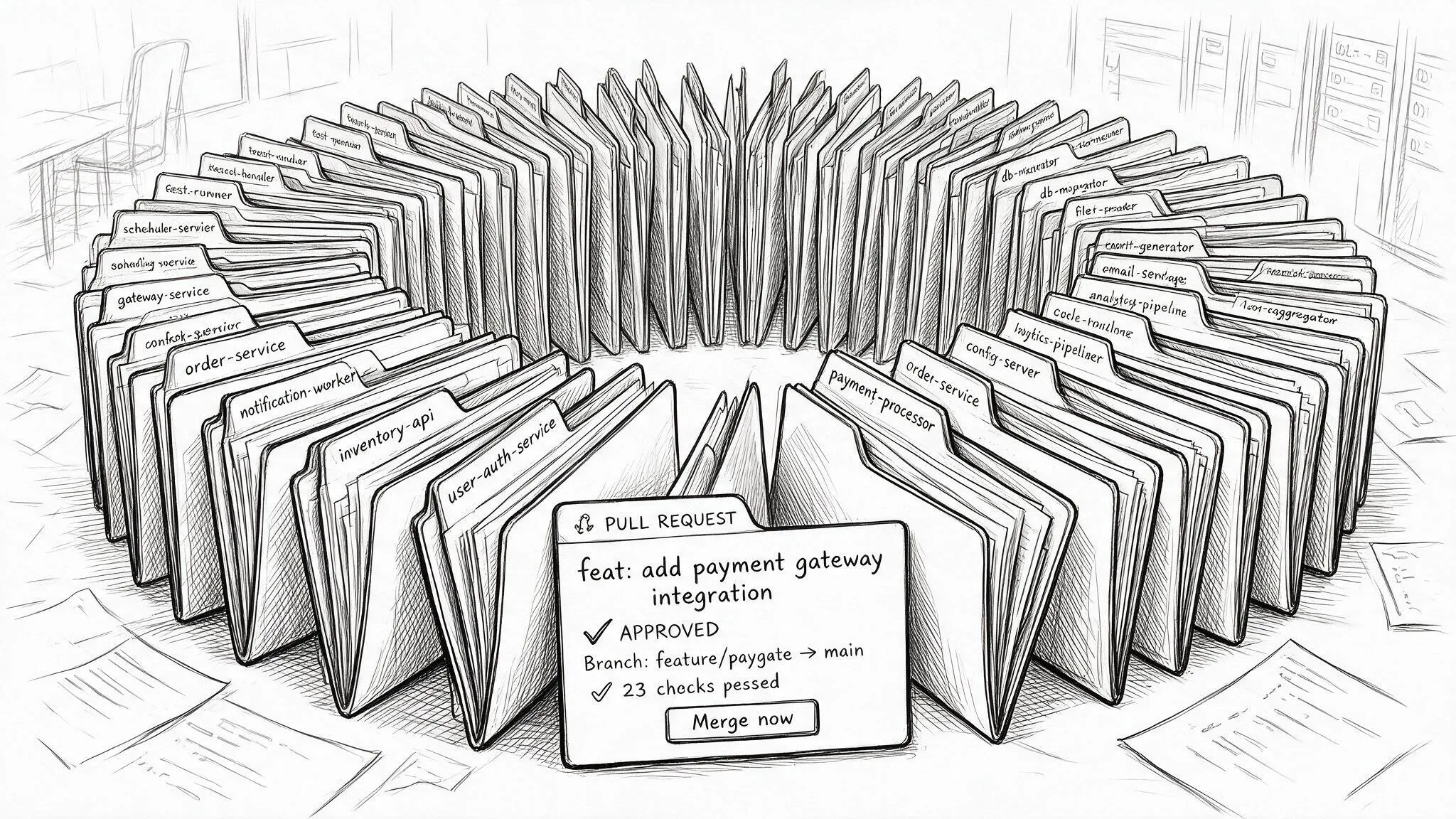
One change, three thousand lines
A single merge from his team now touches 20 repositories.
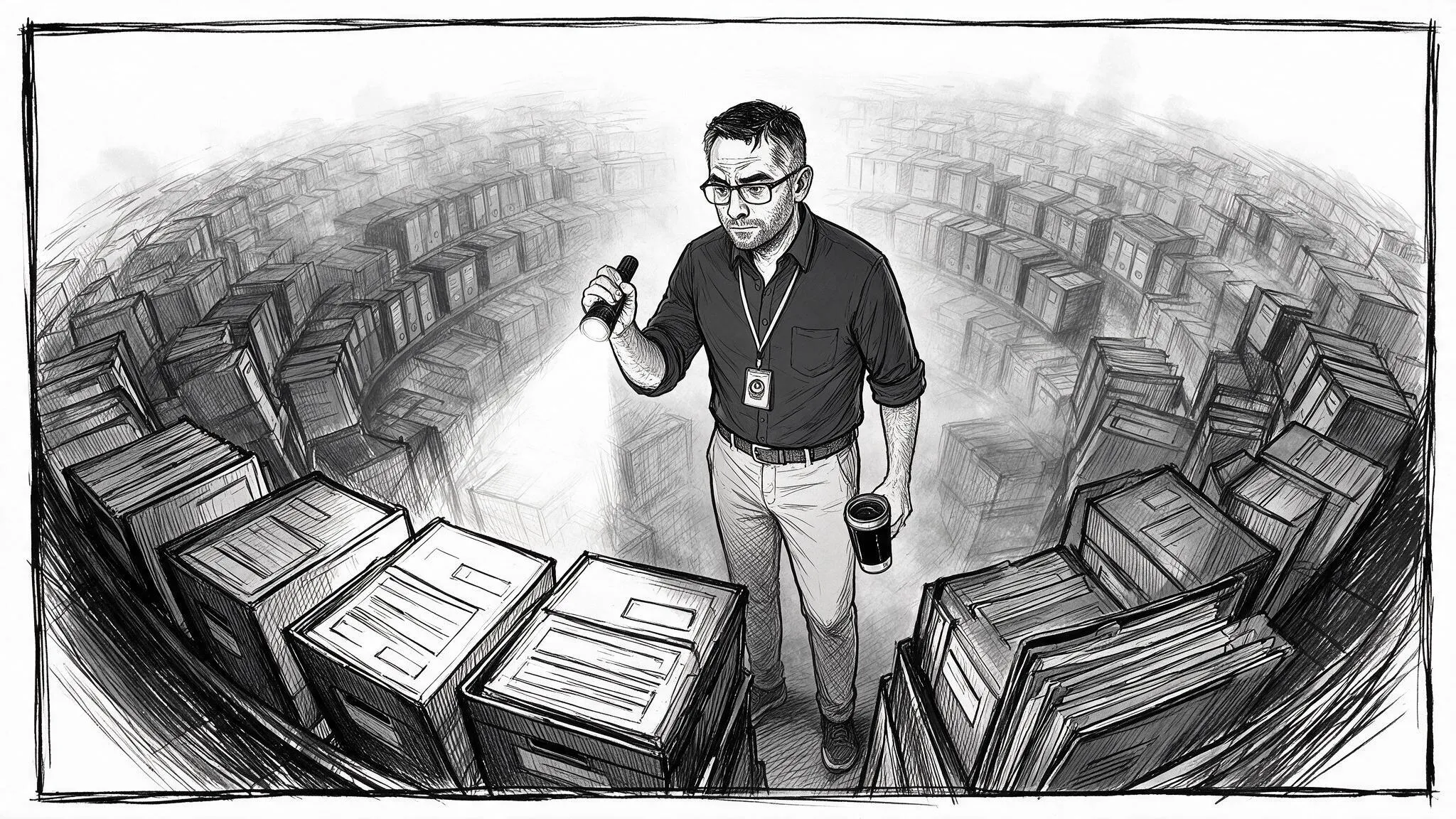
Three repos in context. Ninety-seven in the dark.
He can't hold it in his head
Mark and his copilot remember three or four repositories at best. The rest is fog.
Cognitive debt is the new bottleneck
The code written races ahead. The code anyone understands barely moves.
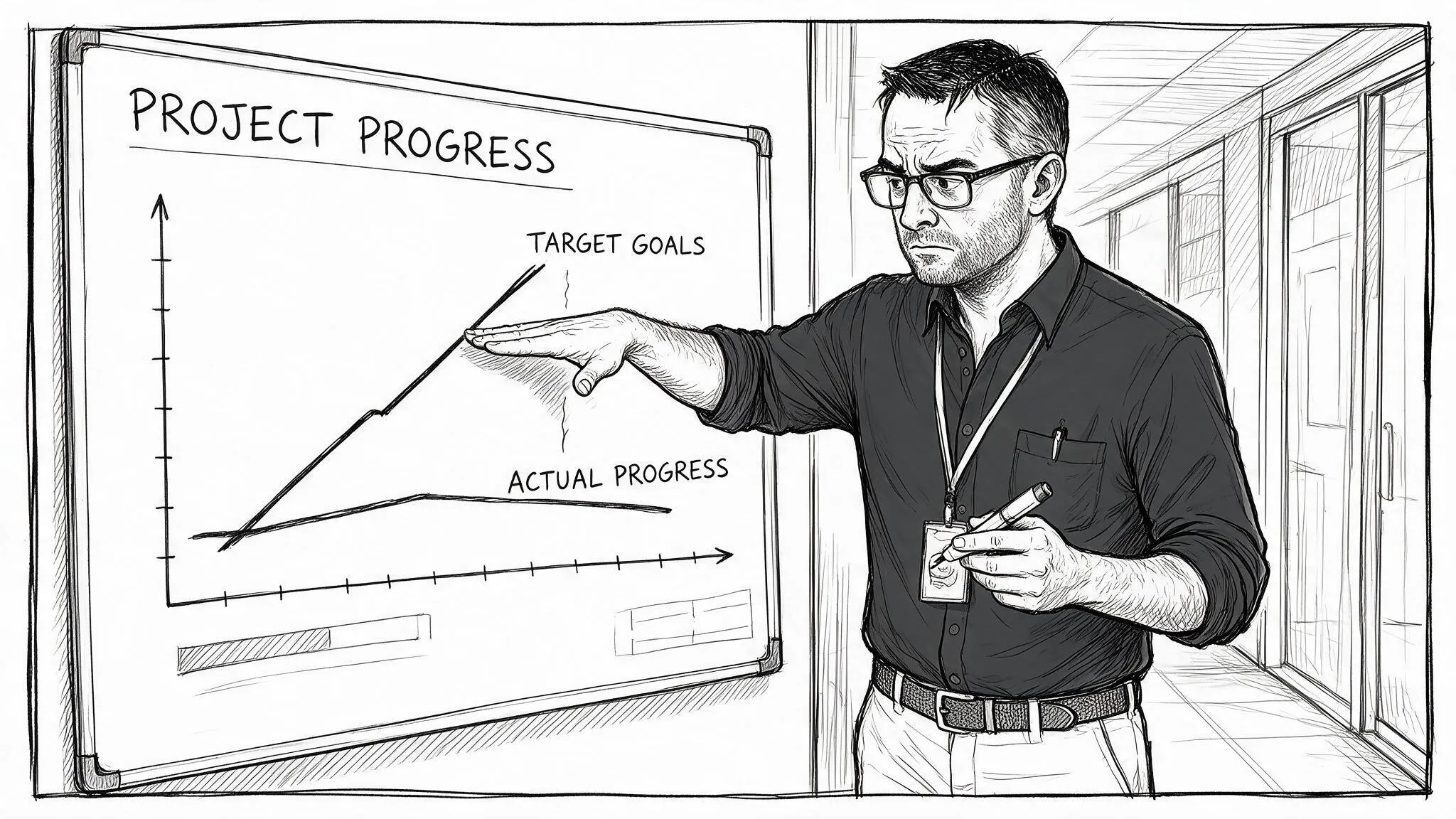
Cognitive debt
The widening gap between what the team ships and what anyone can explain.

2 a.m.
Somewhere in the fog was the thing that breaks. It found him first.

My team writes at the speed of AI. I verify at the speed of one tired human.
Paying it down by hand
One anxious review at a time, instead of building.
If you ship software, you're Mark
Three moments every engineering leader has already lived.
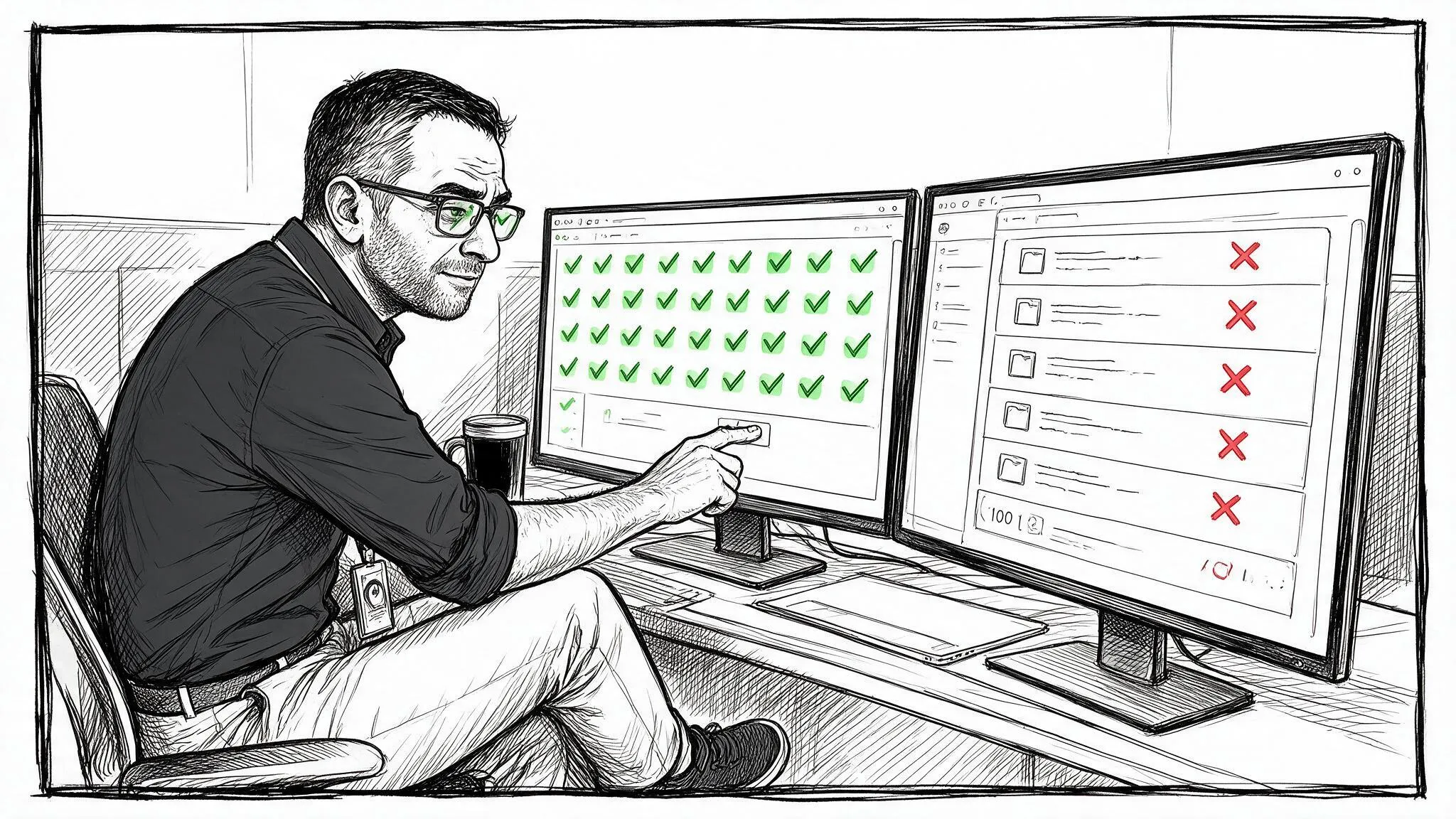
We break things weekly. We still ship four times faster.
Everybody writes 10× code
Outages are frequent and priced in. Speed is what the roadmap, the market and the board reward.
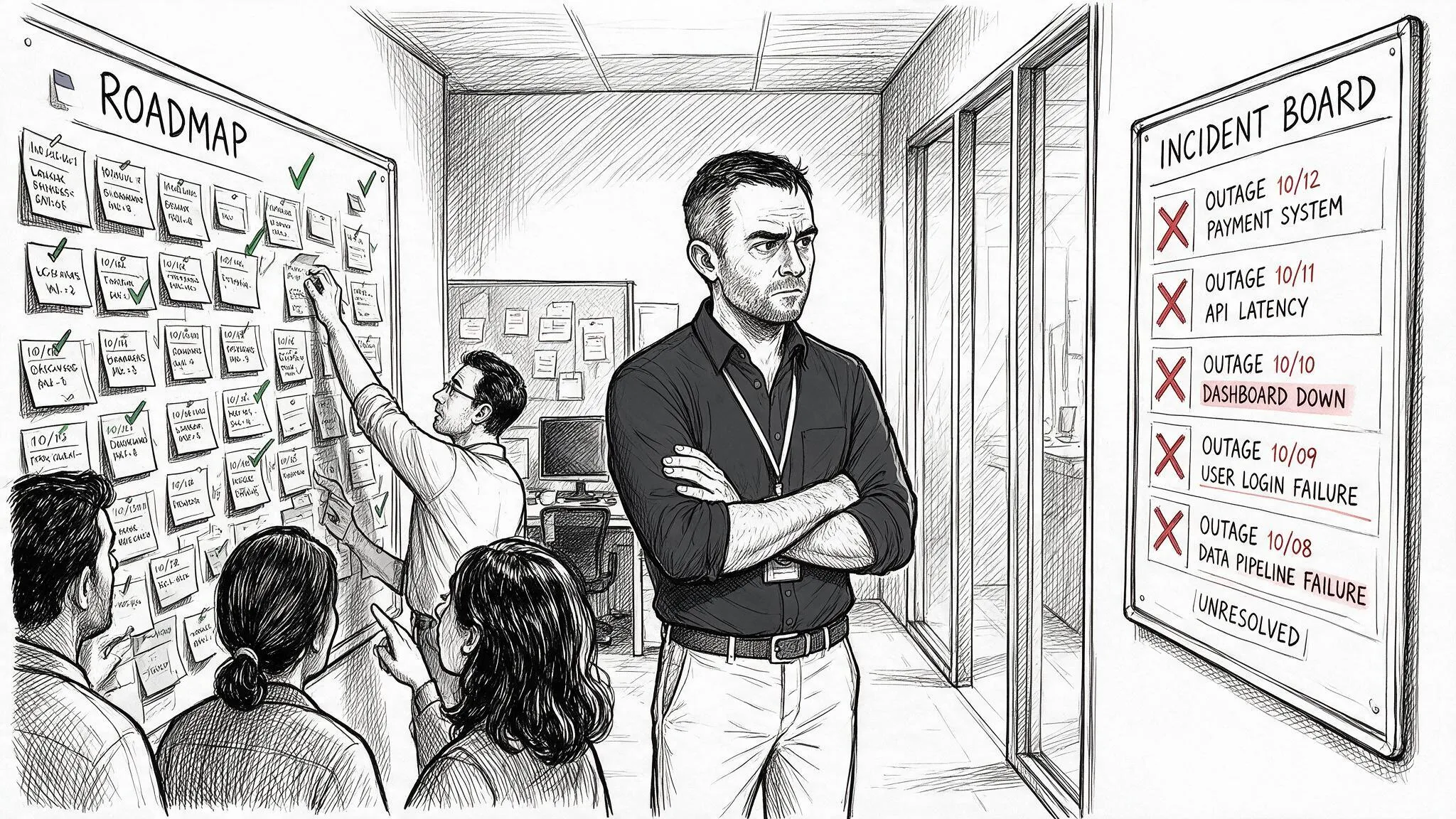
All green. Merge it.
Approved because the tests are green
Every check passed in the repository the change was written in. That was the only place it was ever tested.
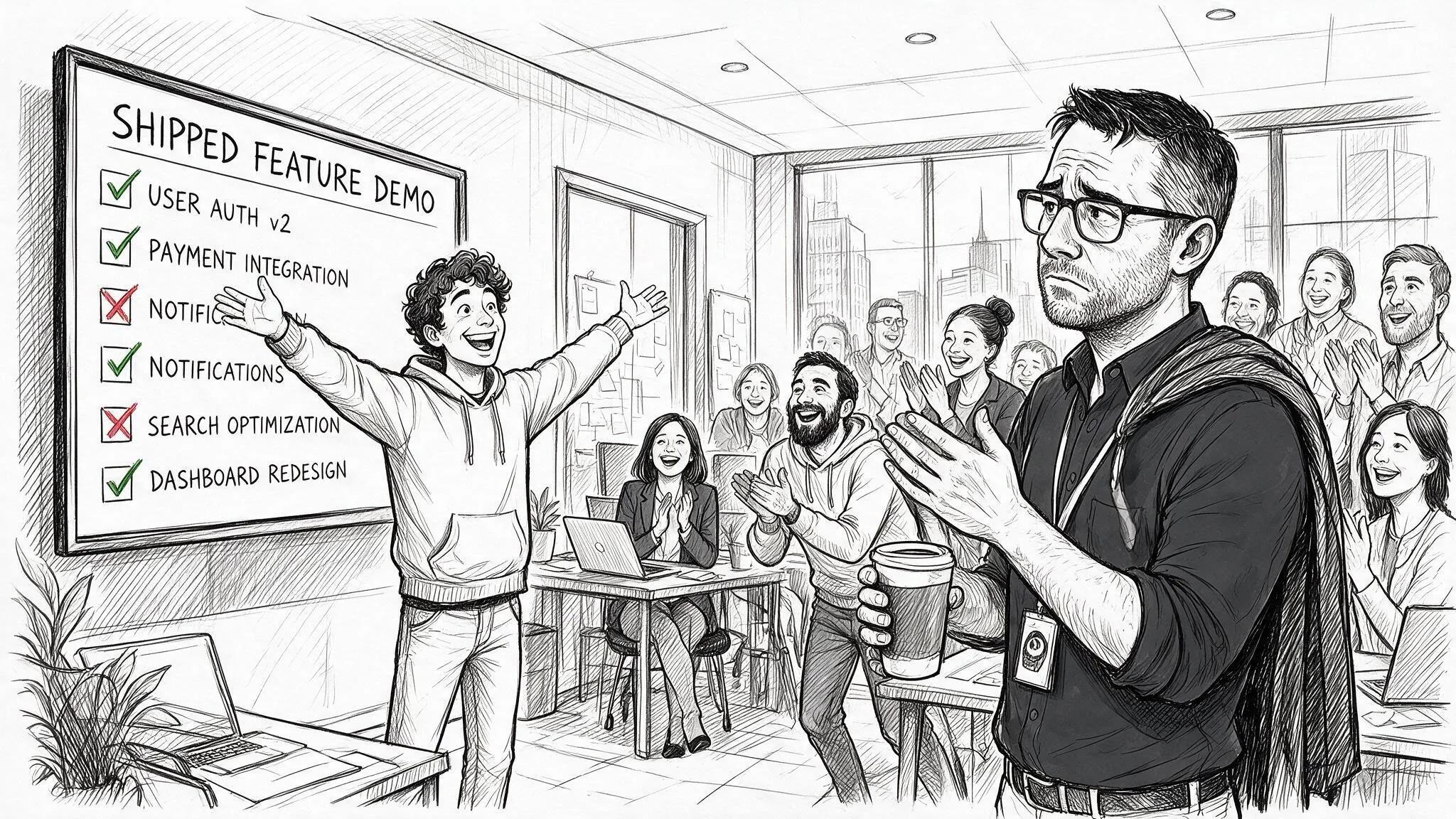
It compiled clean. The contract lived three repos away.
It fails everywhere else
The agent wrote from the spec in front of it. Mark reviewed the repo in front of him. Neither saw the contract three repos away.
Now run the tape forward
Nothing here needs a new invention. It only needs the current rate to continue.
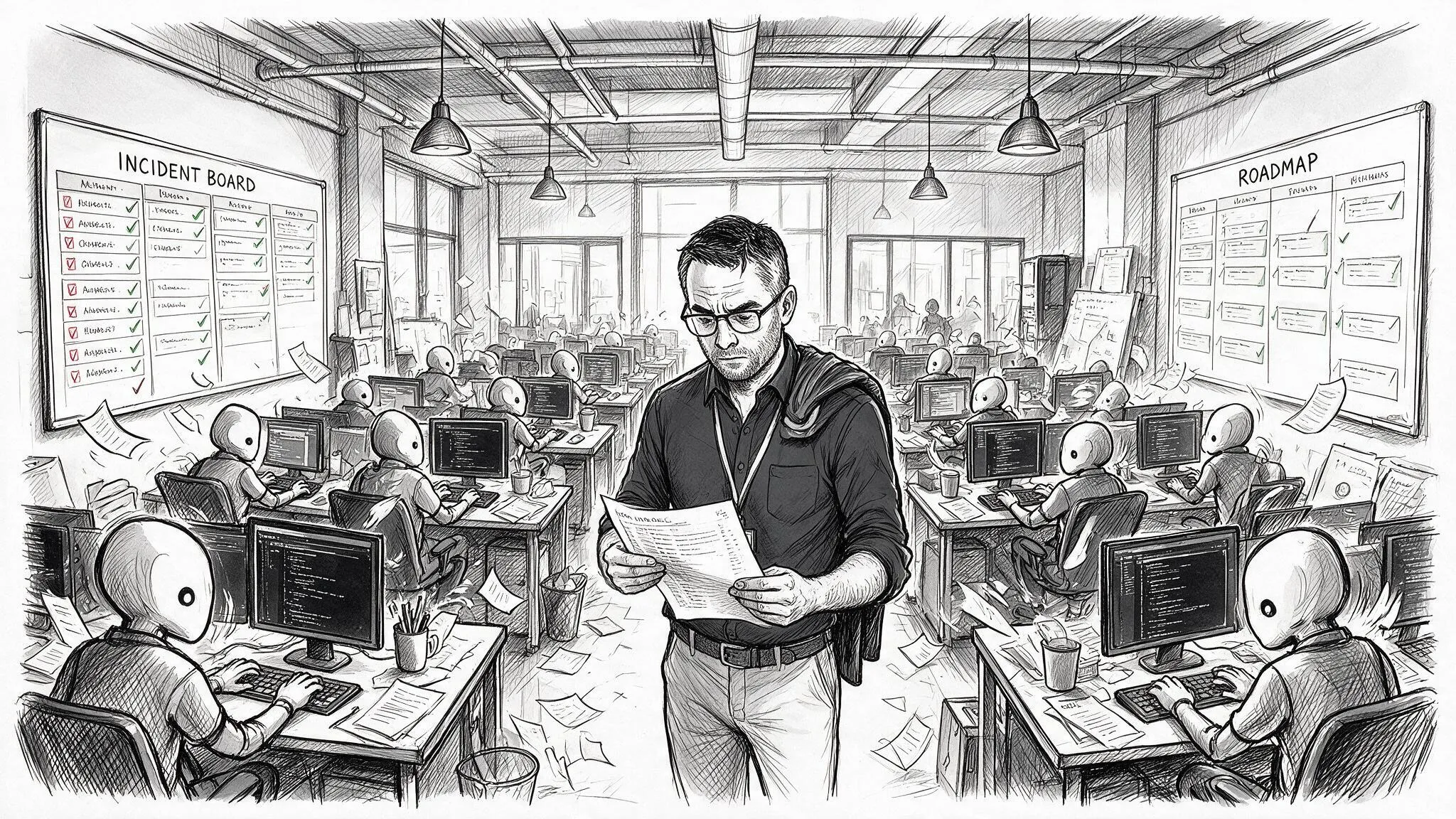
100× the code
Agents already write most of it, and no one runs cross-repo analysis on any of it.
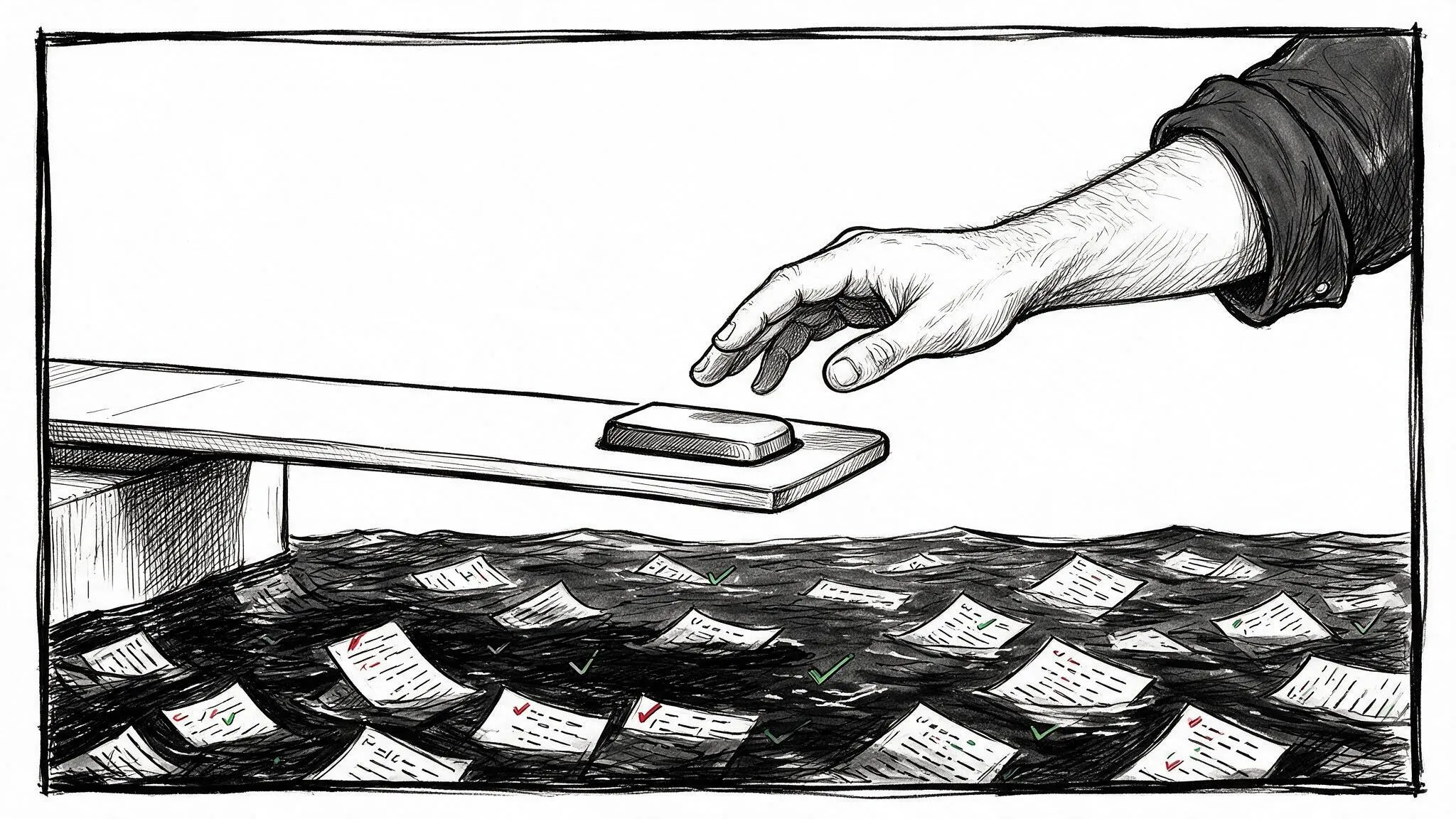
Hope it holds.
Every merge is faith
Approval stops meaning verified and starts meaning nobody objected in time.
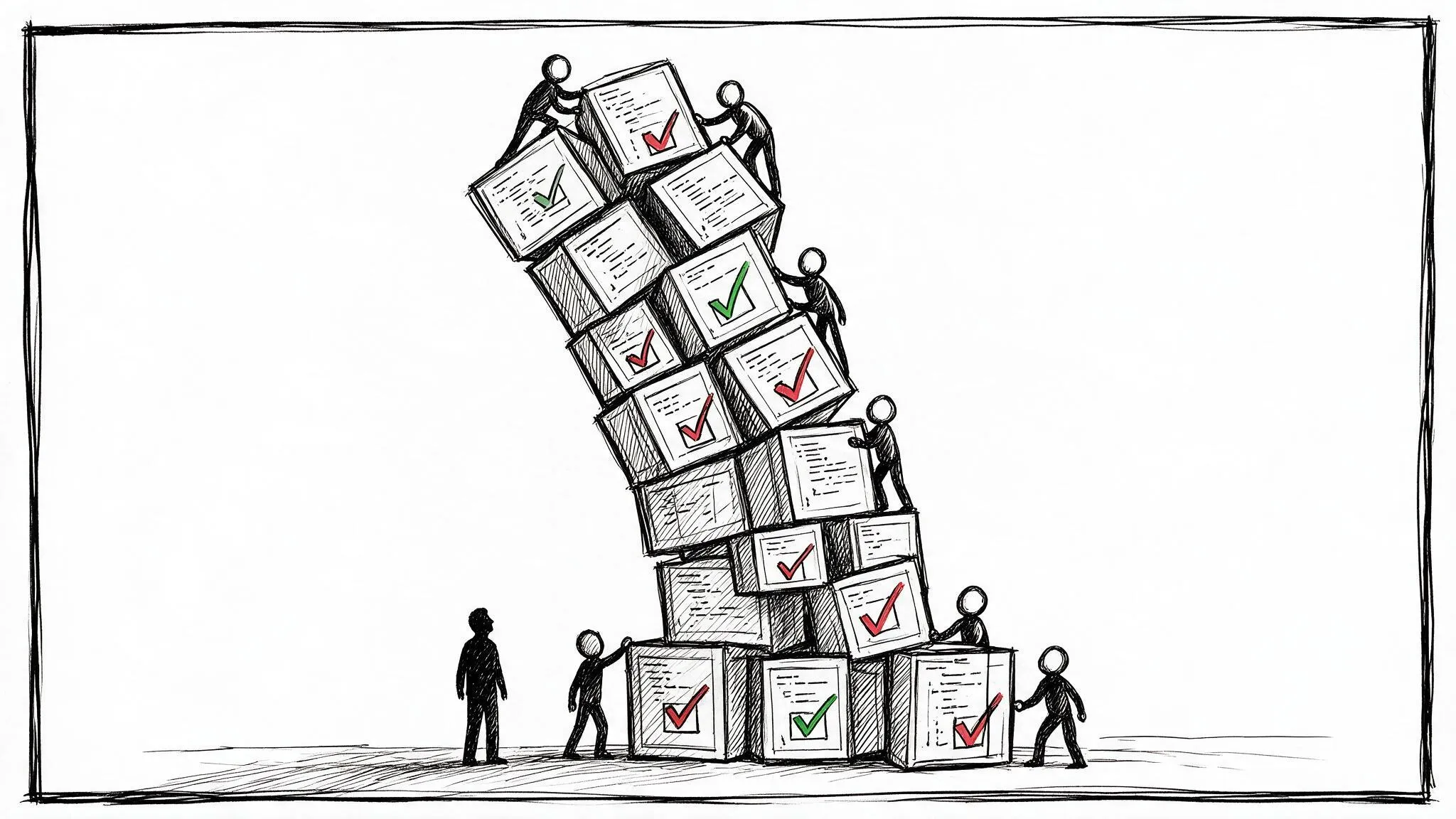
Agents on agent code
New output piles onto last year's unreviewed code, generated against assumptions no one recorded.
Two years on, no one can change it
Or: the same two years with a verification layer underneath.
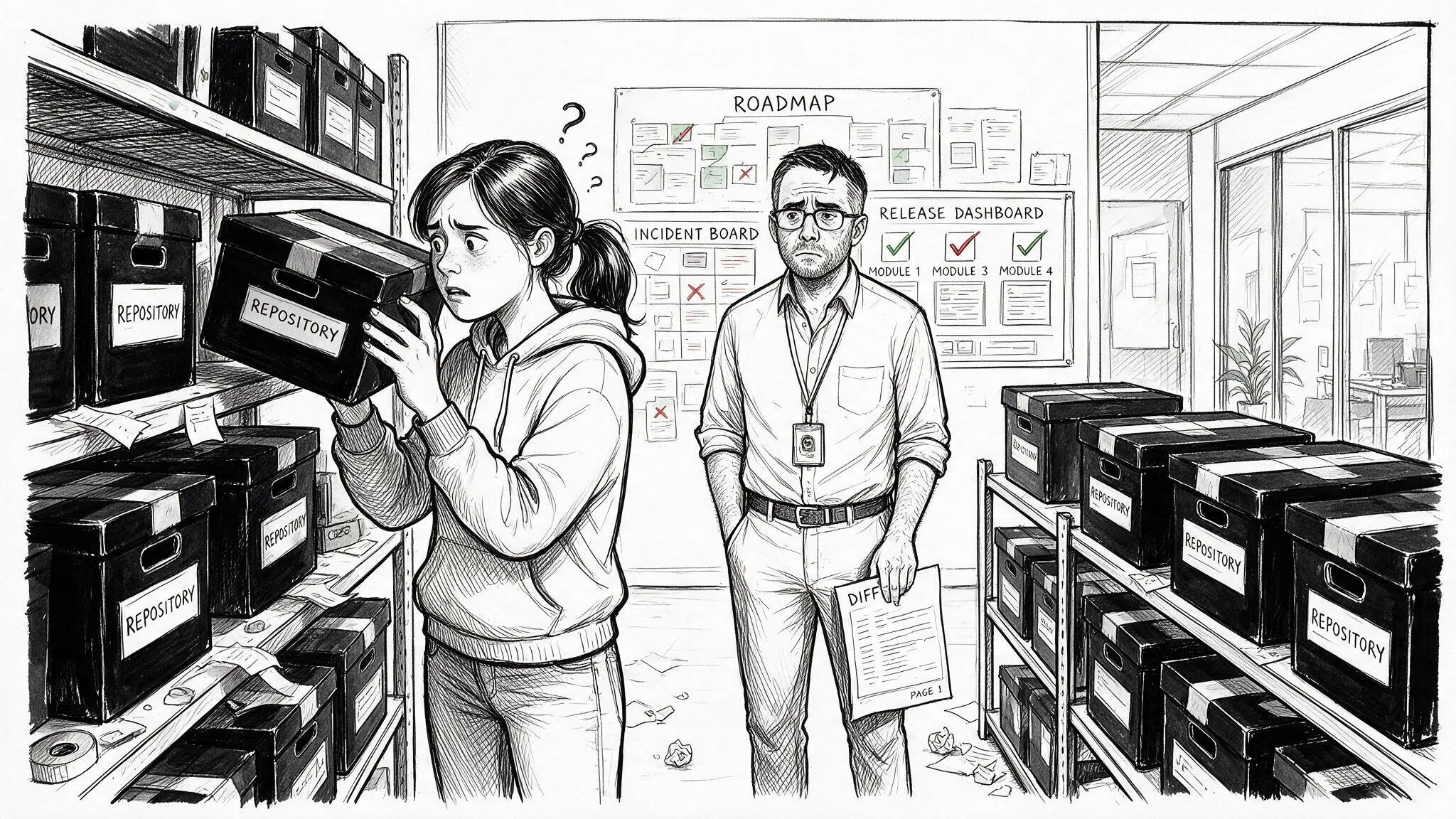
Who prompted this? Nobody remembers.
Every repo a black box
The reasons are gone. Only the running behaviour is left, and it is the only spec.
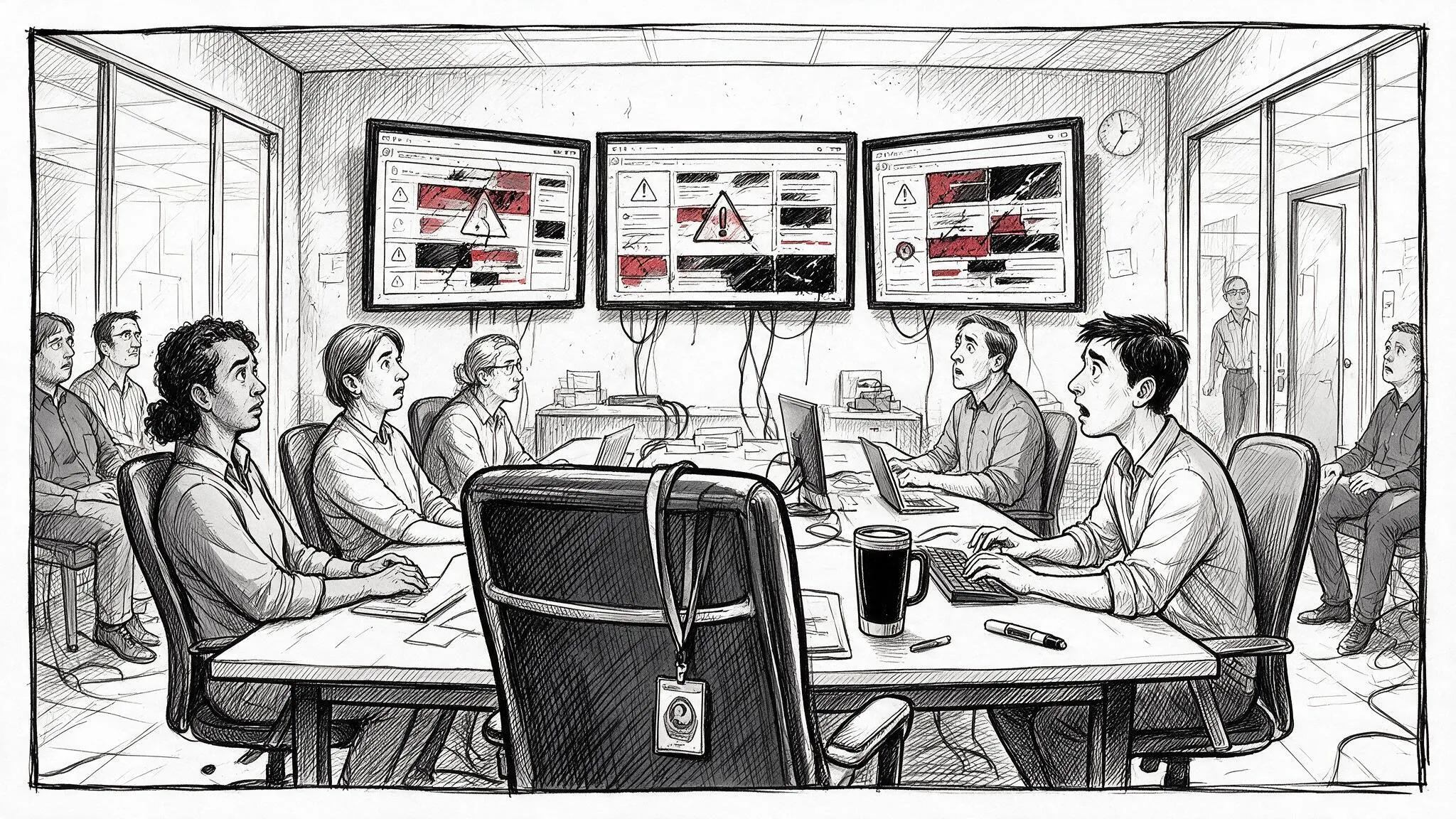
The system runs the business. Not one of us understands it.
No one can change it
Production breaks faster than anyone can trace, and every fix risks two more breaks.
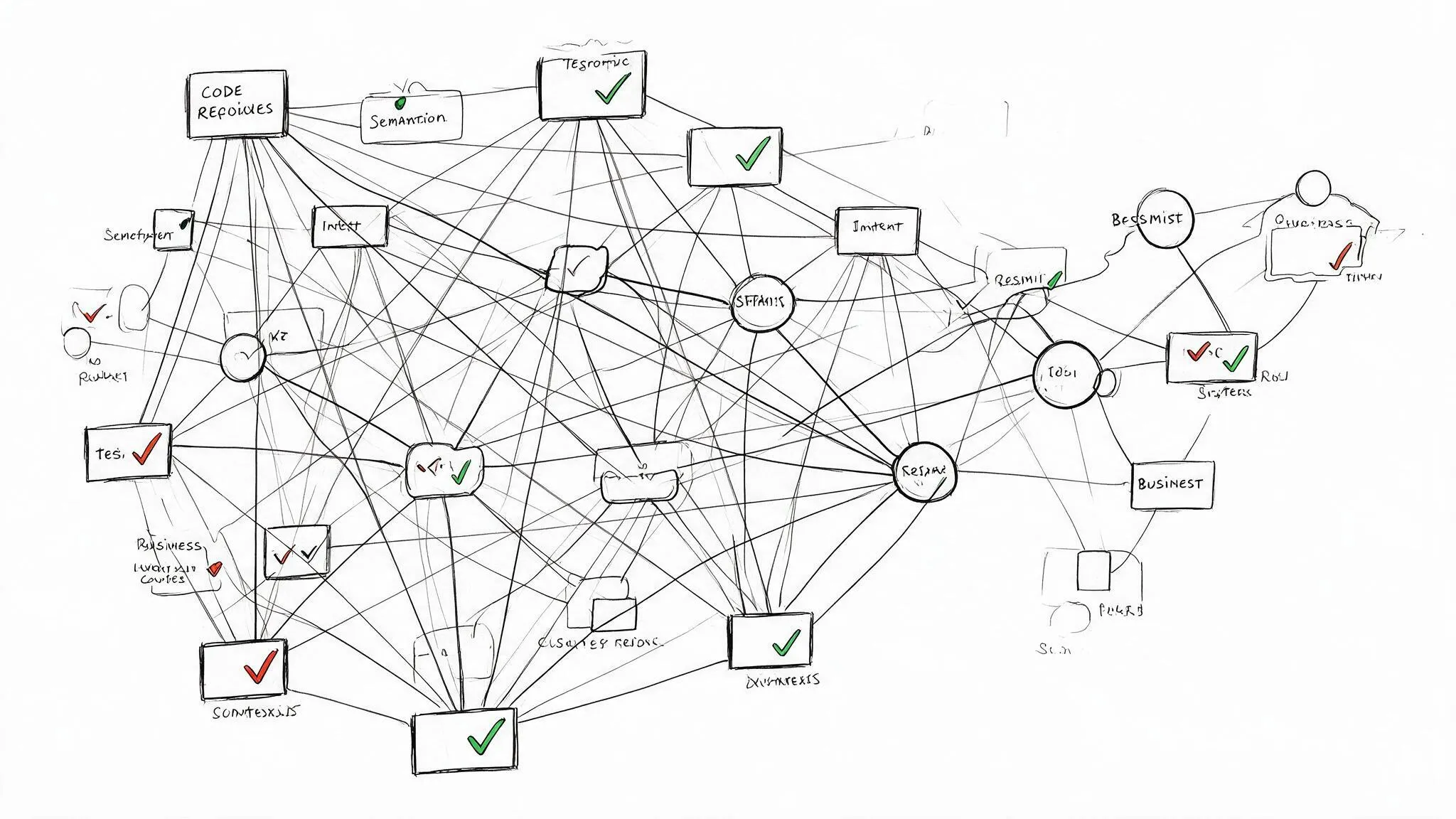
Or a verification layer
Built once from the code you already run, read by every tool, checked before every merge.
You already know which repository to test this on
Point us at it and read the rest of the page while it indexes. First findings in about ten minutes.
Running on a real repository
A recorded walkthrough. No slides, no staged repository.
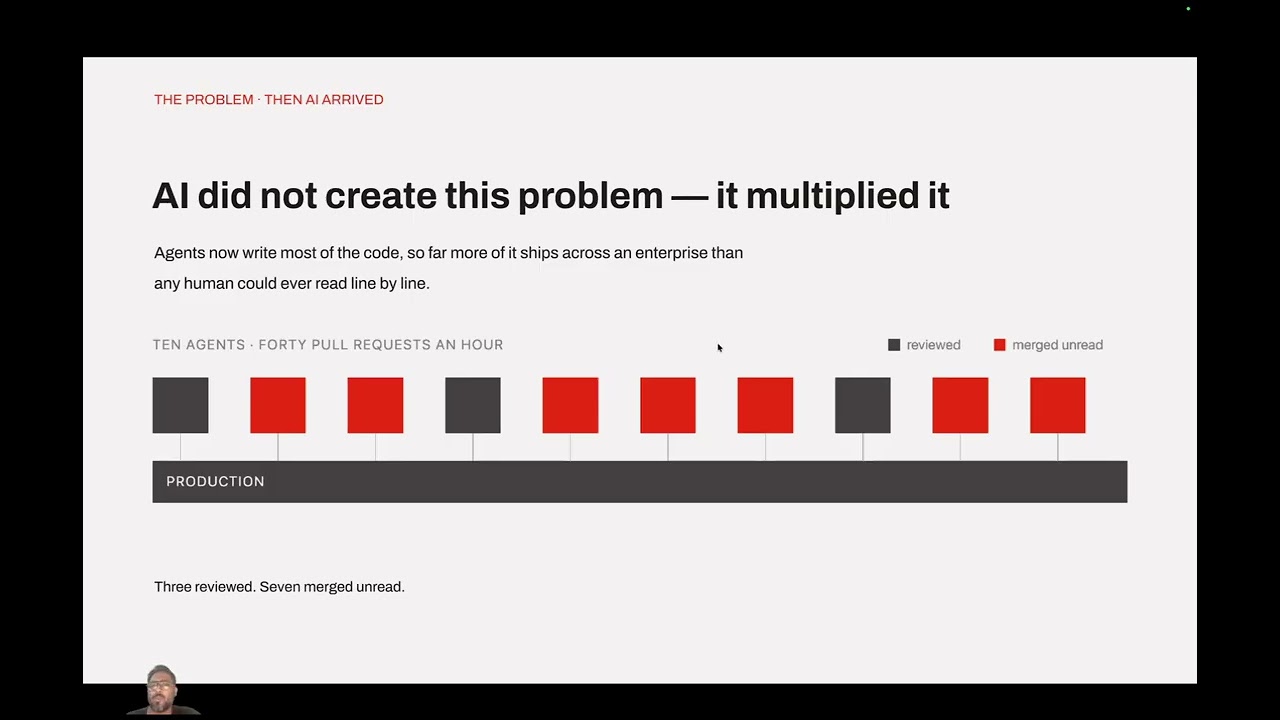
Catching the merge that breaks billing
A clean diff with green tests, held at the gate, with the contradiction shown — and the blast radius of the change across every repository it touches.
We indexed the React ecosystem
Sixteen libraries, read the same way a repository is read. Your code and its dependencies answer from the same layer.
Analyse the code once, before anybody asks a question
Four steps. The first three run before anyone asks a question.
Ingest every repository
Every repository, branch and commit, including the services nobody has opened since 2019.
What each unit does, and why
For each unit of code we derive what it does and what it is for, then attach the file and line that says so.
One map of all repositories
Structure and intent live in one graph that spans repositories, so queues and shared schemas are edges like any other.
Serve any MCP client
A question becomes a lookup against that graph rather than a fresh search across your codebase.
Your source never crosses the boundary
The layer and the MCP server sit inside your private cloud. The indexer runs on open-weight models, your own AI gateway, or your enterprise AI. Answers cross the boundary. Source does not.
$ claude mcp add --transport http bytebell http://127.0.0.1:8080/mcpHow the number was measured
Measured on Kubernetes. Reproduced on customer estates. Recorded runs are published.
Public repositories, so you can rerun it yourself.
More repositories than the benchmark, and accuracy went up.
Upstream and downstream analysis plus verification, daily.
No vector store to size, no embeddings to refresh, no ontology for anyone to maintain by hand.
Reindexing is triggered by the commit itself. The layer updates five minutes after each commit.
That is the real cost of most platform tools. Here it is zero, and the two production estates are the evidence.
Verification priced like a developer tool
Building it internally means buying six months of negative results at full price. We know: we launched AST plus embeddings in January 2026 and deleted it in March on accuracy.
Cross-repo graph, blast radius, PR review, hosted layer over MCP, VS Code extension.
Free for open source projects, forever
Connect a repositoryRun the layer entirely inside your own cloud. Open specs and index, yours to deploy.
For enterprise discounts, please reach out to us — or email saurav@bytebell.ai.
Talk to usConnect a repository
Point it at the repository you were already worried about.
We index it, derive the specification, and check the next change against it — across every repository, before it merges.
Pick 5 repositories. We will prove it on your code.
We index them, verify a real cross-repo change in front of you, and rerun the benchmark on your codebase during the pilot.